

Digital inclusion
User experience: what do internet users expect from websites?
Now an essential part of everyday life, the web has changed our habits by creating new expectations. Administrative procedures, online shopping, news, culture, services… Everything now goes through web interfaces, used by internet users who are ever more connected… and demanding.

Mobile use on the rise
Smartphones continue to win over the French, who want to be able to go online on the move: in 2019, 37.4% of them preferred mobile, compared with 22.6% for computers (source: Fevad).
Organisations must therefore offer mobile-friendly web interfaces to avoid frustrating users. To do so, more and more sites use web applications, which are often more efficient and better suited than native apps.
This growing use of mobile is also confirmed in e-commerce: in 2019, 22% of online sales revenue came from mobile purchases, up 5 points. User experience must therefore take into account every step of the customer journey on mobile.
E-commerce: increasingly personalised websites
More and more French people are shopping online: in 2019, online sales revenue came close to €100 billion* (+13% compared with 2017). A growing share, 8 out of 10 seniors over 65 now shop online. This group must be taken into account in a website’s ergonomics and display to meet their need for comfort.
To build loyalty and stay as close as possible to users’ needs, websites now focus on personalising the user experience: just as a customer receives an individual welcome when walking into a shop, e-commerce sites now adapt the display of their interface or personalise their offer according to the visitor.
Personalisation is a major issue: 74% of internet users say they feel frustrated when a website’s content is not personalised (source: Evergage). Above all, personalising the customer journey on an e-commerce site helps improve the conversion rate. Now demanding, users want to find what they are looking for quickly and easily, or they may leave the site.
Digital accessibility: a duty towards people with disabilities
Last February, the Conseil national du numérique (French Digital Council) published a report (in French) on website accessibility, highlighting organisations’ “civic duty” to make their digital media accessible. According to the report, only 4% of public websites comply with the regulations, and only 13% of the 250 most used online administrative procedures are accessible to people with disabilities.
Beyond the legal obligation, it has now become essential for public and private organisations to commit to a voluntary digital inclusion approach, giving a large majority of internet users access to their online services. Everyone should be able to enjoy an efficient, comfortable browsing experience suited to their needs, whatever their disability, disorder or difficulty.
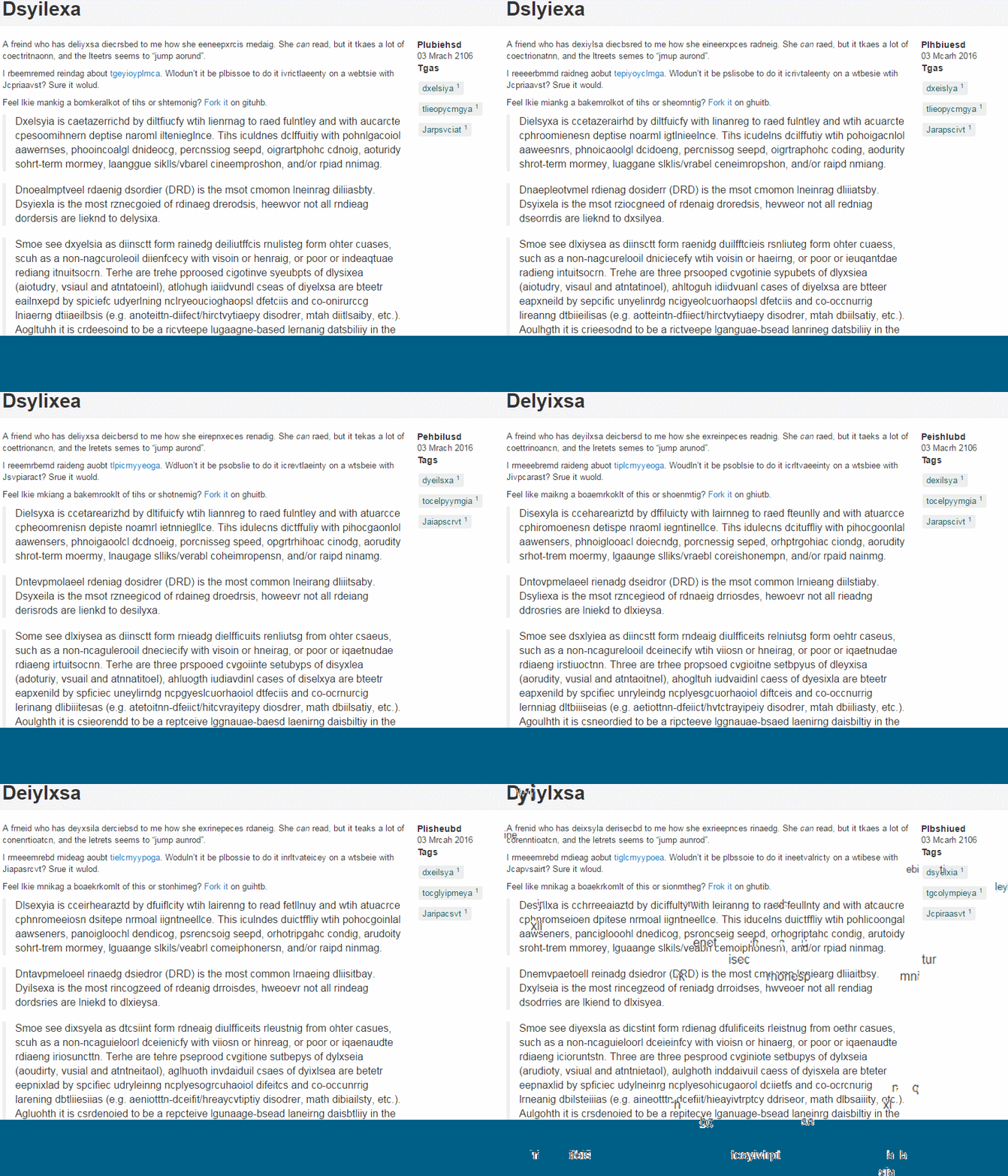
There are many accounts of people who were unable to check out a basket on an e-commerce site or complete an administrative procedure online. Some reading disorders, such as dyslexia, can be an obstacle when browsing a website. Given that around 3 million people are affected in France (source: FFDYS), taking this need into account in a website’s display improves browsing comfort and, therefore, the user experience.
Simulation of how a person with dyslexia sees text:
Key takeaways…
Ever more connected and demanding, internet users want quick and easy access to information, and to shop online without difficulty on computers, mobiles or tablets. The user experience on a web interface must be pleasant, combining speed, efficiency and personalisation.
In this context, organisations are turning to innovative technologies that offer users a personalised web display suited to their needs.