
Digital inclusion
Web trend: the success of “dark mode”
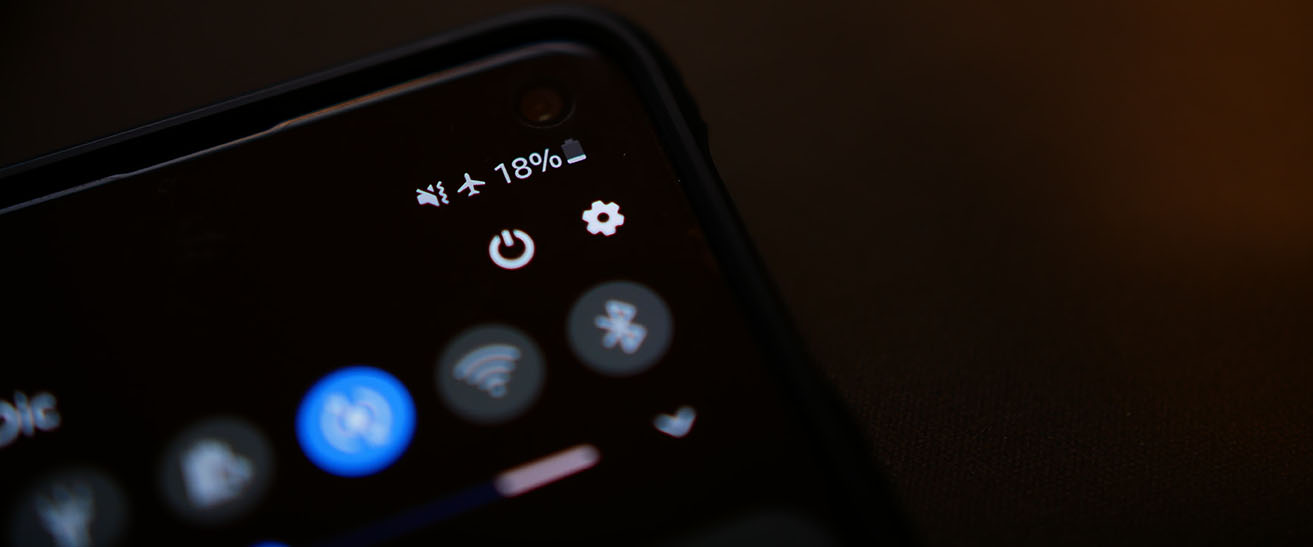
First introduced a few years ago in certain apps, “dark mode” has now become widespread in response to internet users’ enthusiasm for this theme. Social networks and many interfaces now offer this feature. More than a mere aesthetic choice, dark mode brings significant benefits for internet users, who are ever more connected and looking for comfort.
The early days of dark mode
Originally, dark mode (also called “night mode”) was the norm: for technical reasons, the first desktop computers all used it, displaying green text on a black background.
In the 1990s, this theme was abandoned in favour of black text on a white background. The reason: a study by the Sensory Perception & Interaction Research Group showed that users found it easier to read black text on a white background than white text on a black background.
Since then, cathode-ray screens have been replaced by plasma or LED screens, which changed the way we read on screen. Contrast management techniques have improved, bringing dark mode back into the spotlight.
Social networks were the first to offer it
Social networks were among the first to offer dark mode and make it popular with millions of internet users: Twitter since 2016, Instagram since 2019 and, more recently, Facebook since 2020. Also worth mentioning is the chat app Discord, which has offered a dark theme since 2015 and made it its original default theme.
Operating systems have also answered the call of dark mode: Windows 10 includes a native dark theme, as has macOS since 2018. As for Android and iOS, they have offered a fairly comprehensive mode since 2019.
Finally, many smartphone manufacturers are also adding it to their features.
To keep up with this trend, FACIL’iti’s digital inclusion solution has also added dark mode to its various web display filters.
Is the dark theme better for our health and the planet?
This display mode offers many advantages for users: the dark theme lowers screen brightness and emits less blue light, which helps reduce eye strain.
Various studies tend to show that dark mode is better for health overall. According to some of them, it increases visual acuity, reduces fatigue and is generally preferred by users, who find that it makes websites and apps simpler to use.
From an environmental point of view, dark mode scores points: it reduces energy consumption and extends smartphone battery life between charges, thereby prolonging the lifespan of batteries.
Above all, a personal preference
Ultimately, choosing to turn on dark mode is mainly a matter of personal preference: some people will concentrate better on a black background, while others will prefer a white one. Some internet users will experience less eye strain, while others will find it harder to locate information. Finally, for some, dark mode will be an aesthetic or ethical choice linked to environmental convictions.
For a web user experience tailored to everyone’s needs, why not simply give users the choice? With certain tools (such as FACIL’iti), it is now possible to install on a website, web app or intranet a “dark mode” that internet users can easily switch on and off.
What about you: do you prefer dark mode or light mode?
Sources:
- Pourquoi le mode sombre (ou dark mode) est-il tendance ? (pourquoicomment.info, in French)
- The past, present, and future of dark mode (uxdesign.cc)
- L’astigmatisme (krys.com, in French)
- Publications of the Sensory Perception & Interaction Research Group (cs.ubc.ca)
- The surprising reason computer screens aren’t green on black (gizmodo.com)
- Le saviez-vous : pourquoi les écrans d’ordinateur n’affichent plus les textes sur fond noir ? (mac4ever.com, in French)
- Effects of Dark Mode on Visual Fatigue and Acuity in Optical See-Through Head-Mounted Displays (researchgate.net)
- Dark project (drupal.org)
- Gist hamoid/10a6ba90af15fd3d4e80 (github.com)
- Mode sombre : pourquoi il faut l’utiliser (rotek.fr, in French)